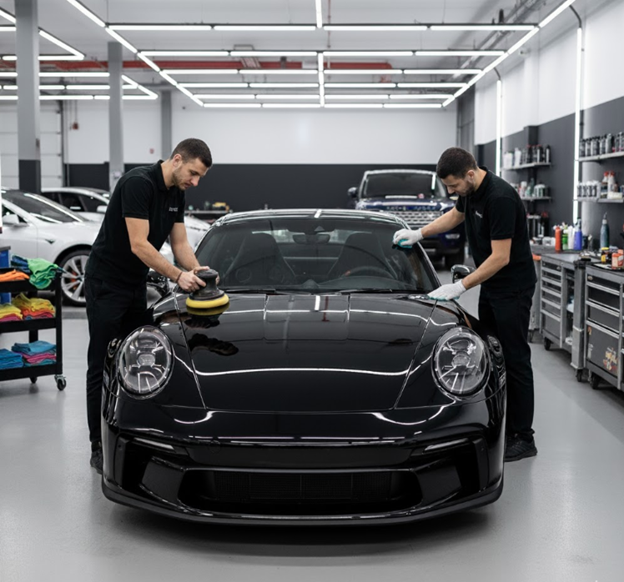
Understanding Consistent Vehicle Care
There is a practical responsibility that is associated with vehicle ownership that is seen only after visible wear sets in. Gradually, dust accumulation, moisture exposure, and everyday road residues have an impact on comfort and appearance. Most automobile owners do not take any action until the car appears worn out. A more appropriate question tends to follow.
What does one do to keep a car in good condition without restructuring the whole time frame?
Mobile auto detailing supports a preventive approach rather than a reactive one. Regular maintenance deals with cleaning and repairing surfaces, protecting materials, and performing maintenance to last longer. You do not want to be showroom perfect. You are safeguarding value in the long-term. When maintenance is predictable, the automobiles are more graceful in age, and ownership is less pressurizing.
Why Onsite Care Fits Modern Routines?
Work timetables do not allow long trips to run errands or time wastage. When having work, time with family, and personal obligations, car maintenance usually falls to the bottom of the list. That does not signal neglect. It reflects reality.
Physical services will eliminate unwanted friction. A vehicle owner is able to carry on with their daily activities as the vehicle is serviced at the same place. No waiting areas. No making other transportation arrangements. This convenience promotes consistency, which eventually leads to improved vehicle condition.
The fluctuating weather patterns in British Columbia make it even more important. Rain, coastal breeze, and seasonal debris are all conditions that are easily maintained without the logistical burden.
What Goes Into a Thoughtful Detailing Process?
Describing is much more than a superficial gloss. All cars have substances that react variously to cleaning processes. There are exterior paint, interior upholstery, wheels, and trim that all demand a particular method of care.
Professional car detailing services rely on structured processes rather than guesswork. Products correspond to surface type. The tools correspond to the sensitivity of materials. The objective is a simple one. Good cleaning capabilities without hastening the wear. Coat surfaces in a non-accumulative manner. Repair looks with no cheating.
There are occasions when owners of a car fear that their constant care is destructive. Well-performed routines do just the contrary. Frequent treatment lowers the abrasion, staining, and degradation of the material.
Realistic Expectations for Long-Term Results
Regular care will provide quantifiable results, but it demands realism. Detailing does not stop time. Cars continue to wear out naturally. What varies is the rate of such wear.
Paint is more resistant to fading. Interiors are also comfortable and scentless. Minor problems are easily solved before they develop into costly problems. Conceptualize vehicle care in the same way as fitness care. A single session is not a transformative experience. Repetition creates results.
There are car owners who make fun of it, saying that their car receives better treatment than they do. But humorously speaking, that is the truth about the dependability of routines.
How Technology and Skill Shape Outcomes?
Contemporary detailing is a mixture of practicality and tools that are in the process of development. Equipment augments efficiency; however, technique settles results. The level of pressure control, selection of products, and surface knowledge can be felt.
Those teams that remain abreast with methods mitigate risk and give foreseeable outcomes. Various types of vehicles need varying strategies. A daily commuter experiences various conditions compared to a family vehicle that is taken on the weekend. Modifying methods is a guarantee of proper attention.
Halfway into this discussion, one can mention that Yellow Star functions in the framework of this principle since it does not focus on quick fixes, but on training, process consistency, and adaptability.
Choosing a Service That Respects Your Time
Caring for vehicles should not be an inconvenience. The vehicle owners have the advantage of posing simple questions when assessing their options. Do appointment windows change easily? Is communication clear? Are expectations described in advance?
Dependability tends to manifest itself in minor aspects, like punctuality and the structure of the working process. Consideration of the property around. These variables are as important as apparent outcomes. Consistency is realistic when the care is in accordance with the real schedules. Trust would, over time, lessen decision fatigue. Experience provides solutions to questions even before they need to be posed.
Final Thoughts on Sustainable Vehicle Upkeep
Sustainable vehicle maintenance is most effective when the maintenance is manageable. Regular practices secure comfort, looks, and future worth without having to work all the time. On-site solutions make maintenance easy and also flexible to real-life needs.
The yellow Star helps in this balance by equalizing the professional processes and practical convenience, which enables owners of the cars to keep their cars running without undue inconvenience. The benefits would be observable and consistent when care is routine and not reactive.
Frequently Asked Questions
Q. How often should a vehicle receive professional care?
Frequency depends on usage patterns, exposure levels, and storage conditions. Regular schedules help maintain surface integrity.
Q. Does mobile auto detailing replace shop-based visits?
For routine maintenance and protection, it often delivers comparable outcomes with added convenience.
Q. Are car detailing services suitable for older vehicles?
Yes. Techniques and products are adjusted based on vehicle age and material condition.
Q. What should a vehicle owner prepare before an appointment?
Removing personal items helps access surfaces easily, but extensive preparation is unnecessary.
Q. Can consistent detailing support resale value?
Maintained appearance and condition often improve buyer confidence during resale discussions.
Q. How long does a typical session take?
Duration varies based on vehicle size and condition, though most appointments conclude within a few hours.
Q. Is on-site vehicle care effective during colder months?
With proper planning and equipment, consistent care remains effective throughout the year.